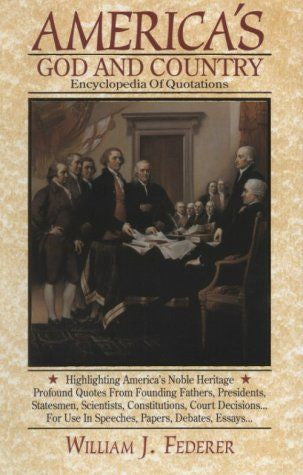
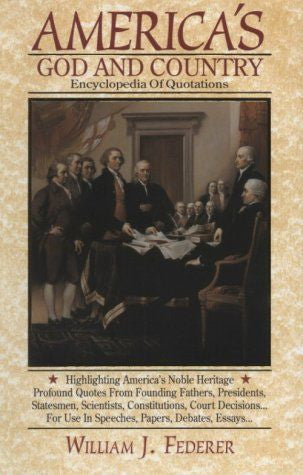
The Declaration of Independence was approved JULY 4, 1776.
John Hancock, President of the Continental Congress, signed first, saying "the price on my head has just doubled."
Next to sign was Secretary, Charles Thomson.
Benjamin Franklin said:
"We must hang together or most assuredly we shall hang separately.
The Declaration refers to God:
"Laws of Nature and of Nature's God...
All Men are created equal, that they are endowed by their Creator with certain unalienable Rights...
Appealing to the Supreme Judge of the World for the Rectitude of our Intentions..."
"And for the support of this Declaration, with a firm reliance on the protection of Divine Providence, we mutually pledge to each other our Lives, our Fortunes, and our sacred Honor."
Many of the 56 signers did in fact lose their "Lives" and "Fortunes" during the war, as did thousands of patriots who sacrificed their Prosperity for their Posterity.
Of the Signers:
17 served in the military,
11 had their homes destroyed;
5 were hunted and captured; and
9 died during the war.
George Walton was wounded and captured at the Battle of Savannah.
Thomas Heyward, Jr., Arthur Middleton, and Edward Rutledge were made prisoners at the Siege of Charleston.
Richard Stockton was dragged from his bed at night and jailed.
John Hart's home was looted and he had to remain in hiding.
Lewis Morris had his home taken and used as a barracks.
Philip Livingston lost several properties to British occupation and died before the war ended.
Abraham Clark had two sons imprisoned on the British starving ship Jersey.
John Witherspoon's son, James, was killed in the Battle of Germantown.
Francis Lewis' wife was imprisoned and treated harshly, so that she died not long after her release.
Thomas Nelson's home was bombarded.
Carter Braxton lost his fortune.
Thomas McKean wrote that he was "hunted like a fox by the enemy, compelled to remove my family five times in three month."
When Samuel Adams signed the Declaration, he said:
"We have this day restored the Sovereign to whom all men ought to be obedient. He reigns in heaven and from the rising to the setting of the sun, let His kingdom come."
John Adams wrote:
"I am apt to believe that it will be celebrated, by succeeding generations, as the great anniversary Festival. It ought to be commemorated, as the Day of Deliverance by solemn acts of devotion to God Almighty.
It ought to be solemnized with pomp and parade, with shews, games, sports, guns, bells, bonfires and illuminations from one End of this Continent to the other from this time forward forever more."
John Adams continued:
"You will think me transported with enthusiasm but I am not.
I am well aware of the toil and blood and treasure, that it will cost us to maintain this Declaration, and support and defend these States.
Yet through all the gloom I can see the rays of ravishing light and glory. I can see that the end is more than worth all the means.
And that Posterity will triumph in that Days Transaction, even although we should rue it, which I trust in God We shall not."
Hide Endnotes
http://www.thedeclarationofindependence.org/ Adams, Samuel. 1776, statement made while the Declaration of Independence was being signed. Charles E. Kistler, This Nation Under God (Boston: Richard G. Badger, The Gorham Press, 1924), p. 71. Peter Marshall & David Manuel, The Light & the Glory (NJ: Fleming H. Revell Co., 1977), p. 309. "Our Christian Heritage," Letter from Plymouth Rock (Marlborough, NH: The Plymouth Rock Foundation), p. 8. D.P. Diffine, Ph.D., One Nation Under God - How Close a Separation? (Searcy, Arkansas: Harding University, Belden Center for Private Enterprise Education, 6 edition, 1992), p. 6. Of the fifty-six signers: 17 lost their fortunes, 12 had their homes destroyed, 9 died during the war, 5 were captured as prisoners of war (George Walton, Thomas Heyward, Jr., Arthur Middleton, Edward Rutledge, and Richard Stockton), 1 had two sons captured and put on the British starving ship Jersey (Abraham Clark) and 1 lost his son in the War (John Witherspoon.)